

Key Takeaway
The average desk worker sits 10 hours daily, causing musculoskeletal problems that cost employers through absenteeism and reduced productivity. Regular stretching at work maintains joint mobility, increases blood flow, reduces tension, and improves focus. Employers should schedule stretch breaks every 45-90 minutes.
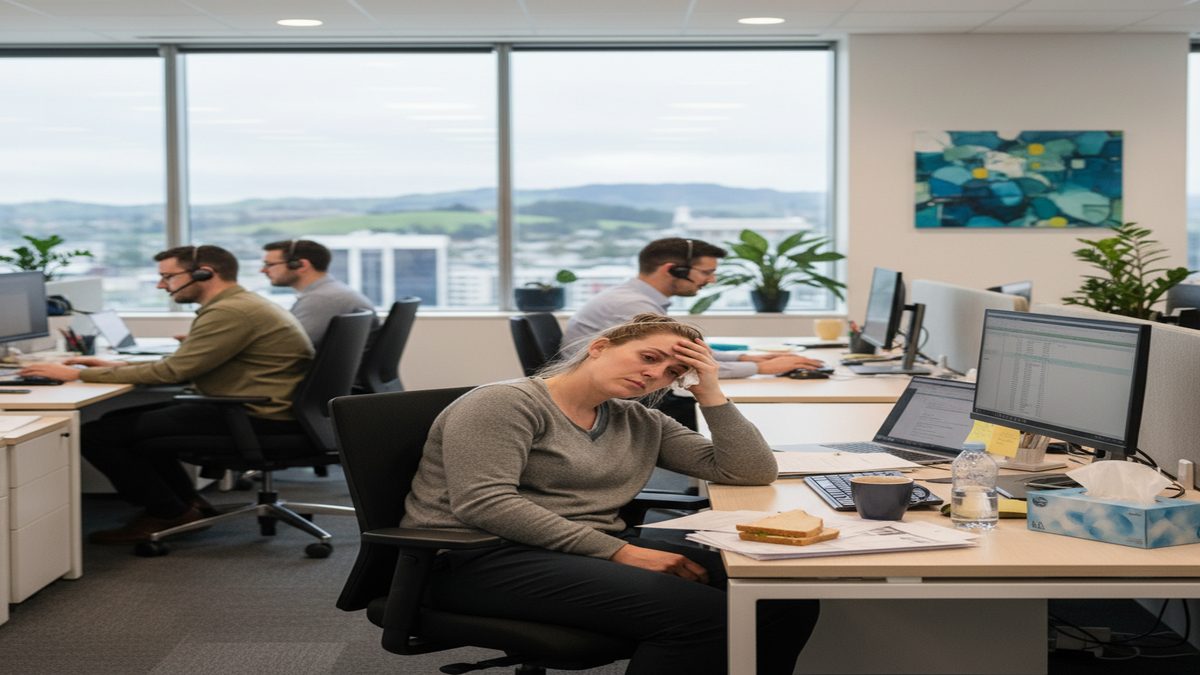
Here's a statistic that should alarm anyone who manages an office: the average desk worker sits for approximately 10 hours per day. That's more time spent motionless than sleeping. Our bodies, evolved over millennia for movement, hunting, gathering, and generally not remaining in ergonomic chairs, are being asked to do something profoundly unnatural. The consequences are predictable and expensive: chronic back pain, repetitive strain injuries, decreased energy, and a gradual physical decline that no standing desk alone can reverse.
Skip to our interactive checklist to track your progress implementing workplace stretching
The Problem With How We Work
Modern work has become remarkably sedentary. Where previous generations moved through their workdays, walking between departments, manually filing documents, attending in-person meetings across buildings, today's knowledge workers can feasibly complete an entire day without leaving their chairs. This isn't efficiency; it's a slow-motion health crisis.
The human body interprets prolonged sitting as a kind of shutdown signal. Metabolic rate drops. Hip flexors shorten and tighten. Shoulders round forward as we lean toward screens. The spine, designed for dynamic movement, compresses into positions that were never meant to be sustained for hours.
Musculoskeletal disorders now account for a significant portion of workplace health claims in New Zealand. Back pain alone costs the economy hundreds of millions annually in treatment, lost productivity, and ACC claims. These aren't statistics about construction workers or manual labourers, they're about people whose most physically demanding task is reaching for their coffee cup.
Why Stretching Actually Matters
Regular stretching isn't merely about flexibility, though that's valuable. The benefits cascade through multiple systems:
Physical Benefits
Stretching maintains joint range of motion, which deteriorates remarkably quickly when unused. Those tight shoulders that feel "normal" after years of desk work? That's lost mobility that compounds over time.
Blood flow increases during stretching, delivering oxygen and nutrients to muscles while removing metabolic waste. This isn't minor, improved circulation affects everything from injury recovery to cognitive function.
Muscle tension, particularly in the neck, shoulders, and lower back, accumulates throughout the workday. Regular stretching interrupts this accumulation before it becomes pain.
Mental and Cognitive Benefits
The physical act of standing and stretching provides a neurological reset. Attention, which naturally wanes after 45-90 minutes of focused work, refreshes when we change physical positions.
Movement triggers the release of endorphins and reduces cortisol, the stress hormone that accumulates during challenging work. A two-minute stretch break can genuinely alter mood and stress levels.
There's also something to be said for the psychological value of momentarily stepping away from a problem. Some of the best solutions arrive during those brief physical interruptions.
The Business Case
For employers who need numbers to justify wellness initiatives, stretching programmes offer compelling returns:
Reduced Absenteeism
Musculoskeletal problems are among the leading causes of sick leave in office environments. A workplace that actively prevents these issues, rather than waiting for them to become medical problems, sees fewer unplanned absences and less productivity loss.
Lower ACC Levies
Workplace injury claims directly affect ACC experience ratings and levies. Proactive injury prevention through movement programmes can improve these ratings, reducing a genuine cost centre for businesses.
Improved Productivity
Employees in pain are not productive employees, regardless of how present they appear. Chronic discomfort erodes concentration, increases error rates, and diminishes the quality of work produced.
Conversely, employees who feel physically comfortable and energised deliver better outputs. The investment in preventing discomfort pays dividends in work quality.
Reduced Presenteeism
Perhaps more insidious than absenteeism is presenteeism, showing up to work while unwell or in pain. Studies consistently show that presenteeism costs employers more than absenteeism because it's invisible and widespread. Employees with chronic pain or stiffness may be at their desks but are operating at a fraction of their capacity.
Implementation Strategies That Actually Work
The difference between successful workplace wellness initiatives and expensive failures often comes down to implementation. Here's what actually works:
Education That Resonates
Don't assume people understand why movement matters. A significant portion of the workforce has internalised the idea that discomfort is normal, just part of having a job. Challenge this assumption directly.
Share resources through channels people actually use: internal newsletters, team chat platforms, physical posters in break rooms. Make information accessible without making it preachy.
Explain the "why" behind recommendations. Adults are more likely to adopt behaviours when they understand the reasoning. "Stretch to prevent the chronic back pain that affects 80% of office workers" is more compelling than "stretching is good for you."
Leadership Modelling
Here's an uncomfortable truth: if managers don't participate in wellness initiatives, employees won't either. When a CEO takes stretch breaks but middle managers roll their eyes, the cultural message is clear, and it's not supportive of movement.
Leaders need to visibly participate in movement breaks. This isn't optional. When the boss stands up and stretches during a long meeting, it gives everyone else permission to do the same.
This extends to respecting boundaries around breaks. Managers who schedule back-to-back meetings without movement time, or who interrupt breaks with "quick questions," undermine their own wellness initiatives.
Scheduled Breaks
Relying on individuals to remember to stretch doesn't work. The same focus that makes someone productive also makes them forget to move for three hours.
Build movement into the work structure. Start meetings with a 30-second stretch. Implement organisation-wide movement breaks at set times. Use shared calendar reminders that prompt the whole team.
Some organisations have experimented with "movement meetings", walking meetings for discussions that don't require screens. These work remarkably well for brainstorming and one-on-ones.
Dedicated Spaces
People are more likely to stretch if there's somewhere appropriate to do it. This doesn't require a yoga studio, a clear area in a meeting room, a quiet corner with a mat, or even just space between desks can work.
Consider what stretching looks like to others. Many people feel self-conscious stretching in open-plan offices where colleagues might comment. Private or semi-private spaces remove this barrier.
Some organisations provide basic equipment: yoga mats, foam rollers, resistance bands. These are inexpensive and signal that movement is genuinely encouraged, not just theoretically supported.
Professional Expertise
Periodic workshops with physiotherapists, occupational therapists, or ergonomic specialists provide expert knowledge that internal wellness champions typically lack.
These sessions serve multiple purposes: they educate employees on proper technique, identify individual risk factors, and demonstrate organisational commitment to health.
Consider offering brief individual assessments. A physiotherapist spending five minutes with each employee can identify specific problem areas and recommend targeted stretches, far more valuable than generic advice.
Specific Stretches Worth Knowing
While personalised recommendations are ideal, certain stretches address the most common desk-work complaints:
Neck and Shoulders
Neck tilts: Gently dropping the ear toward each shoulder, holding for 15-30 seconds per side. This addresses the tension that accumulates from screen viewing.
Shoulder rolls: Slow, deliberate circles backward (the direction matters, most of us round forward enough already).
Upper trapezius stretch: Sitting on one hand while tilting the head away stretches the muscle most responsible for the "carrying the world on your shoulders" sensation.
Back
Seated spinal twist: Crossing one leg over the other and rotating the torso toward the crossed leg. This addresses the compression of sitting.
Cat-cow stretch: On hands and knees, alternating between arching and rounding the spine. Highly effective but requires floor space.
Standing extension: Placing hands on the lower back and gently leaning backward. Counteracts the forward-hunched position of desk work.
Hips and Lower Body
Hip flexor stretch: A lunge position with the back knee on the ground, gently pressing the hips forward. Hip flexors shorten dramatically from prolonged sitting.
Figure-four stretch: Crossing one ankle over the opposite knee while seated, then gently pressing the raised knee down. Addresses glute and piriformis tightness.
Standing quad stretch: Holding one foot behind while standing. Simple but effective for the front of the thighs.
Wrists and Forearms
Wrist circles: Rotating wrists slowly in both directions. Particularly important for keyboard-heavy roles.
Prayer stretch: Pressing palms together in front of the chest, then lowering hands while keeping palms connected. Stretches the wrist flexors.
Reverse prayer: The opposite, pressing the backs of hands together. Addresses wrist extensors often neglected in stretching routines.
Creating a Sustainable Movement Culture
One-off initiatives don't create lasting change. Building a genuine culture of movement requires sustained attention:
Normalisation
Movement during the workday should become unremarkable, as normal as getting coffee or checking email. This happens through consistent modelling and repetition, not through memos.
Avoid making movement feel like an interruption to "real work." Frame it as part of working effectively, because it is. The employee who takes stretch breaks isn't less dedicated; they're working smarter.
Removing Judgment
Some people won't participate in group activities. That's fine. Individual stretch breaks, walking meetings, or simply standing while on calls all count.
Avoid creating pressure around participation that makes movement feel like another obligation. The goal is to make moving easy, not to add another box to tick.
Accommodating Different Needs
Not everyone can do every stretch. Physical limitations, injuries, and disabilities mean that standardised routines won't work for everyone. Provide options and alternatives rather than mandating specific movements.
Making It Stick: Practical Tips
For individuals looking to build personal stretching habits:
- Link stretching to existing habits: Stretch every time you return from the bathroom, or before your first sip of coffee. Habit stacking works.
- Start absurdly small: One neck roll is better than an ambitious 10-minute routine you'll abandon by Wednesday. Build from there.
- Use technology: Desktop applications and phone apps can remind you to move. The reminder matters more than sophistication.
- Track the benefits: Notice when you feel better. Awareness of positive outcomes reinforces the behaviour.
- Find an accountability partner: A colleague who stretches when you do provides both reminder and social reinforcement.
Movement as a Workplace Standard
Encouraging workplace stretching isn't complicated or expensive. It requires awareness of the problem, commitment to addressing it, and consistent follow-through that makes movement normal rather than exceptional.
The alternative, ignoring the physical toll of sedentary work until it manifests as injury claims, chronic pain, and decreased productivity, is far more costly. Every employer dealing with musculoskeletal-related absences and ACC claims is paying for problems that movement programmes could have prevented.
Bodies were built to move. Workplaces that acknowledge this reality, and build movement into their daily operations, create healthier employees, better outcomes, and ultimately more sustainable organisations. It starts with something as simple as standing up and stretching.
Workplace Stretching Implementation Checklist
Track your progress implementing a movement culture
Related Employee Lab services
Need More Information?
Our team is here to help answer your questions about employee benefits and insurance.